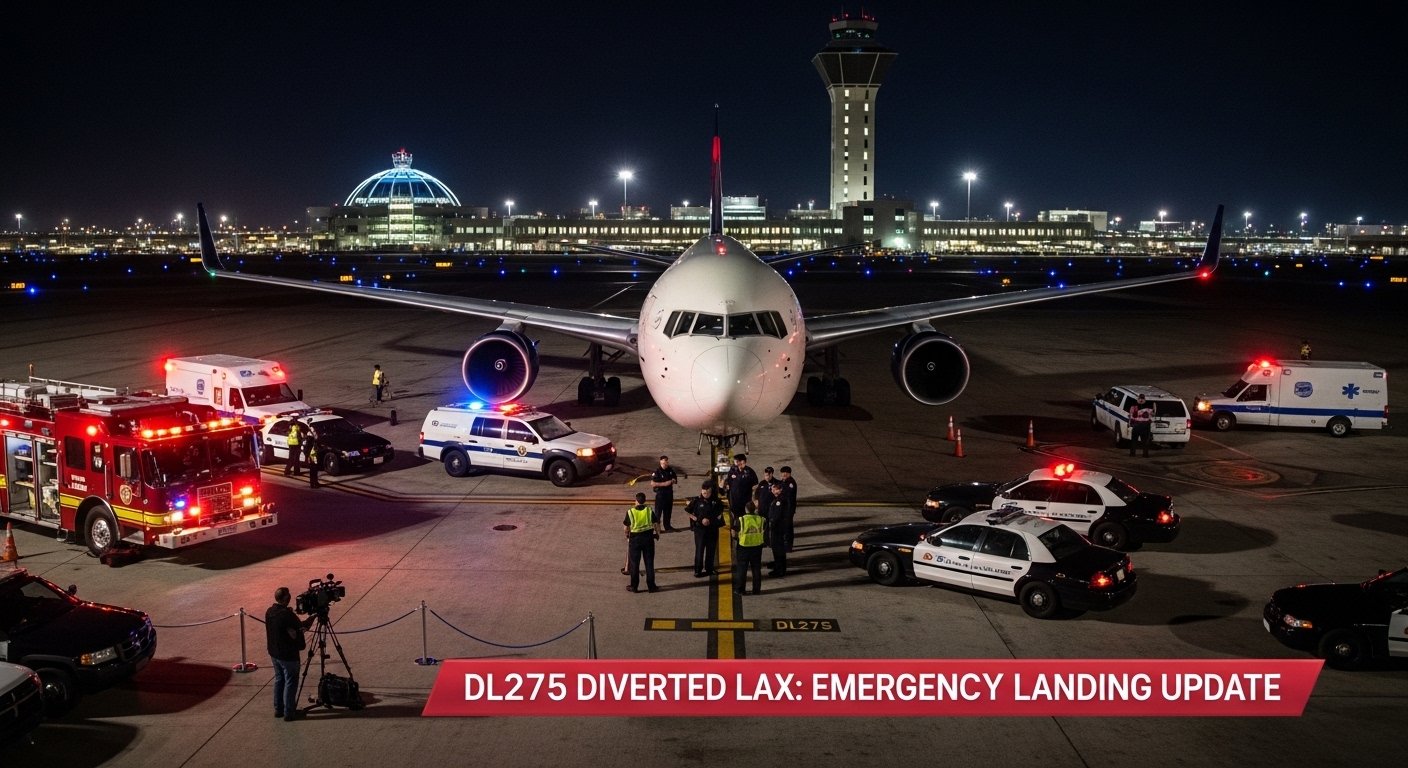
Air travel runs on precise schedules, meticulous safety checks, and predictable routines. When an unexpected event disrupts this flow, it captures the attention of both passengers and aviation experts. Recently, news broke that Delta flight DL275 diverted LAX, leaving many wondering about the exact timeline, the technical failures involved, and the safety measures that protected everyone on board.
This article breaks down the facts surrounding the incident. We will explore the mechanical warnings that prompted the crew’s decision, the aviation protocols triggered during an emergency diversion, and what passengers experience during unscheduled landings. Whether you track commercial aviation news or simply want to know why Delta flight DL275 diverted LAX, this comprehensive analysis covers the critical takeaways.
Contents
- 1 The Incident: How Delta Flight DL275 Diverted LAX
- 2 Understanding the Technical Cause
- 3 Aviation Safety Protocols During Diversions
- 4 Passenger Experience When Delta Flight DL275 Diverted LAX
- 5 Industry Analysis: Are Flight Diversions Increasing?
- 6 What Happens to the Aircraft Post-Diversion?
- 7 The Role of Weather in Aviation Planning
- 8 Conclusion
- 9 Frequently Asked Questions (FAQs)
The Incident: How Delta Flight DL275 Diverted LAX
Flight diversions occur more often than most travelers realize, but they always follow strict regulatory guidelines. The event where Delta flight DL275 diverted LAX serves as a prime example of safety systems functioning exactly as designed.
Initial Flight Path and Warning Signs
The aircraft began its journey with a standard departure sequence, climbing to its cruising altitude without early indications of trouble. Weather reports along the flight path showed standard atmospheric conditions, with some high-altitude moisture typical for the route.
Mid-flight, the flight deck received an automated warning. Modern commercial jets feature redundant sensor networks that monitor every component of the aircraft. In this case, the sensors flagged an anomaly within the engine anti-ice system. This critical system prevents ice buildup on the engine cowlings, ensuring smooth airflow and preventing ice chunks from damaging the internal turbine blades.
The Decision to Divert
Pilots train extensively for mechanical alerts. Upon receiving the anti-ice system warning, the flight crew referenced their Quick Reference Handbook (QRH). The protocol for this specific warning dictates that if the anti-ice system cannot be confirmed operational in conditions where icing might occur, the aircraft must alter its course to avoid high-moisture, freezing environments.
Because the intended route required flying through potential icing conditions, continuing was not an option. The captain made the definitive call: Delta flight DL275 diverted LAX. Los Angeles International Airport offered a safe, massive facility with favorable weather, ample emergency support, and Delta maintenance hubs ready to receive the aircraft.
Understanding the Technical Cause
To grasp why Delta flight DL275 diverted LAX, we must look closely at the mechanical systems involved. Aviation relies on preventing hazards before they occur, which is why seemingly minor sensor issues prompt major route changes.
Engine Anti-Ice Systems Explained
Jet engines operate by pulling in massive amounts of air. At cruising altitudes of 30,000 to 40,000 feet, the outside air temperature sits well below freezing. If the aircraft passes through clouds or visible moisture, that moisture can freeze upon contact with the cold metal lips of the engine intake.
The anti-ice system uses hot bleed air channeled directly from the engine compressor. This hot air circulates through the engine cowling, keeping the metal warm enough to prevent ice formation. If a valve fails to open, or a sensor incorrectly reports that the system is inactive, the crew must assume the system has failed. Operating a jet engine without anti-ice protection in freezing moisture risks engine flameouts or severe mechanical damage.
Investigating Sensor Failures vs. Mechanical Failures
When mechanics inspected the aircraft after Delta flight DL275 diverted LAX, their primary goal was to determine if the anti-ice valve physically failed or if the digital sensor malfunctioned. Aviation maintenance data shows that sensor faults cause a significant percentage of cockpit warnings. Regardless of whether it was a software glitch or a stuck valve, the crew’s decision to land remained the only correct action under Federal Aviation Administration (FAA) guidelines.
Aviation Safety Protocols During Diversions
A diversion is a highly coordinated effort involving dozens of professionals on the ground and in the air. The moment the decision was made that Delta flight DL275 diverted LAX, a complex web of communication began.
Communication with Air Traffic Control
The flight crew immediately notified Air Traffic Control (ATC) of their situation. Because the anti-ice system warning requires a change in altitude or route, ATC cleared the airspace to allow the aircraft to descend to an altitude where icing was no longer a threat.
Controllers at the Los Angeles Air Route Traffic Control Center vectored the aircraft toward LAX. They provided the pilots with priority routing, moving other commercial traffic out of the way. This coordination ensures that the diverted flight has the most direct and fuel-efficient path to the runway.
Preparing for an Unscheduled Landing
Back in the cabin, the crew prepared for arrival. Flight attendants undergo rigorous training to manage passenger safety and calm anxieties during abnormal operations. When Delta flight DL275 diverted LAX, the cabin crew secured galleys, checked seatbelts, and ensured all emergency exits remained clear.
On the ground, LAX emergency services prepared for the arrival. Standard operating procedure for mechanical diversions often involves staging fire trucks and emergency medical personnel near the runway. Even when the risk of a crash is incredibly low, airports never take chances. The aircraft landed smoothly, taxiing to the gate under its own power without further incident.
Passenger Experience When Delta Flight DL275 Diverted LAX
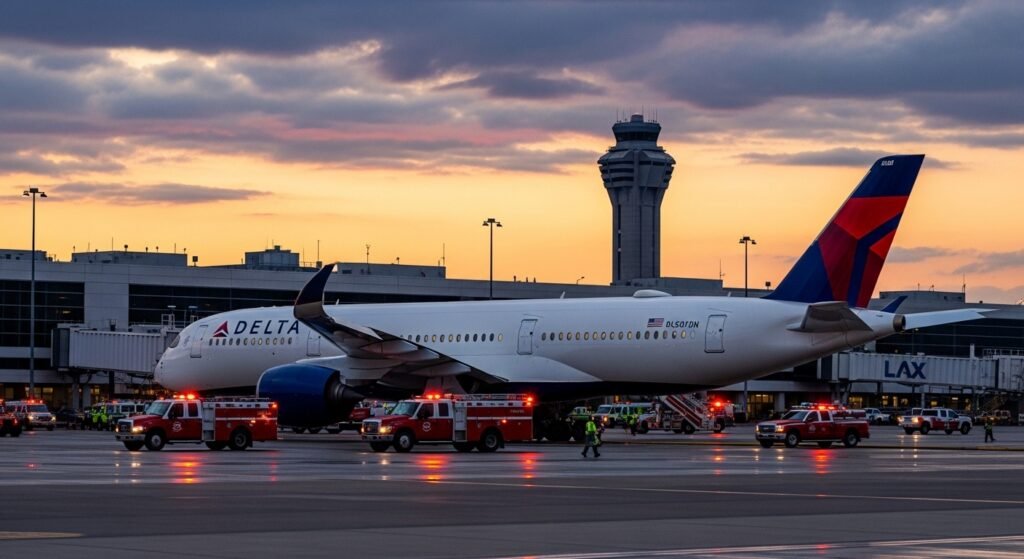
For the people sitting in the cabin, an unexpected diversion brings confusion, anxiety, and frustration. Understanding the passenger perspective sheds light on how airlines manage customer service during mechanical disruptions.
Onboard Announcements and Reactions
Transparency from the flight deck plays a huge role in passenger comfort. Shortly after the pilots resolved their immediate navigation tasks, the captain made a public address announcement. They explained the nature of the warning light, assured passengers that the aircraft was flying perfectly well, and communicated the new destination.
Reports from the cabin after Delta flight DL275 diverted LAX noted that the atmosphere remained generally calm. While passengers felt disappointed by the delay, the clear communication regarding safety prevented panic. Flight attendants moved through the aisles, answering questions and providing water to keep the environment relaxed.
Rebooking and Compensation Rights
Once the aircraft arrived at the gate in Los Angeles, passengers faced the reality of missed connections and altered plans. When Delta flight DL275 diverted LAX, the airline’s ground staff took over.
Because the diversion stemmed from a mechanical issue rather than an uncontrollable weather event, passengers were entitled to specific accommodations. Delta gate agents worked to rebook travelers on the next available flights. For those who needed to wait overnight, the airline typically provides hotel vouchers, meal tickets, and ground transportation. Understanding passenger rights under the Department of Transportation (DOT) guidelines helps travelers advocate for themselves when sudden diversions disrupt their itineraries.
Industry Analysis: Are Flight Diversions Increasing?
Hearing that Delta flight DL275 diverted LAX might make travelers wonder if commercial flights are experiencing more mechanical issues than in the past. Analyzing aviation industry data provides a clearer picture.
Preventative Maintenance vs. Reactive Measures
Statistically, commercial aviation remains safer than ever. The rate of accidents has plummeted over the last three decades. However, the number of precautionary diversions has seen a slight increase. This is not because aircraft are less reliable, but because modern jets feature incredibly sensitive monitoring equipment.
Planes today generate terabytes of data during a single flight. Sensors detect microscopic vibrations, slight temperature fluctuations, and minor pressure changes. When a computer flags a potential issue, crews are trained to act conservatively. The fact that Delta flight DL275 diverted LAX highlights a culture of extreme caution. Airlines prefer the financial cost of a diverted flight over the catastrophic risk of ignoring a warning light.
The Financial Cost of a Diversion
Diverting a widebody aircraft costs an airline thousands of dollars. Costs include excess fuel burn, airport landing fees, passenger compensation, crew overtime, and repositioning the aircraft. Despite these heavy financial burdens, airline safety cultures dictate that cost must never factor into a pilot’s decision to divert. The safe outcome when Delta flight DL275 diverted LAX proves that this safety-first model works effectively.
What Happens to the Aircraft Post-Diversion?
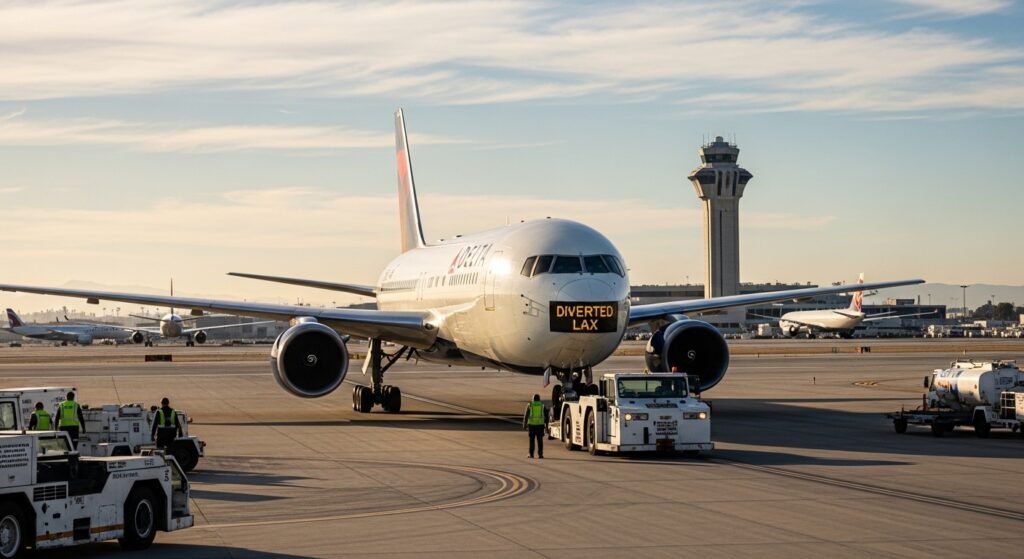
The story does not end once the passengers disembark. The aircraft enters a stringent inspection and repair protocol before it can carry passengers again.
Maintenance Diagnostics
Delta’s maintenance teams at LAX immediately took possession of the aircraft. Mechanics downloaded the flight data recorder logs and ran diagnostic checks on the engine and anti-ice system. If a part required replacement, they sourced it from the airline’s massive inventory network.
FAA and NTSB Reporting
Airlines must document and report certain mechanical failures to the Federal Aviation Administration (FAA). While a simple sensor swap might not trigger a massive National Transportation Safety Board (NTSB) investigation, the data from the incident enters a national database. Aircraft manufacturers use this data to identify trends. If multiple airlines report the same sensor failing, the manufacturer might issue a service bulletin to replace that part across the entire global fleet. The data gathered after Delta flight DL275 diverted LAX ultimately contributes to making all future flights safer.
The Role of Weather in Aviation Planning
While the immediate cause of the diversion involved an equipment warning, weather played the ultimate deciding factor. Aviation and meteorology are deeply intertwined.
Icing Conditions at Altitude
Visible moisture at freezing temperatures presents one of the most significant hazards to aviation. Supercooled water droplets can strike the airframe and freeze instantly. This alters the aerodynamic shape of the wings, increases the weight of the aircraft, and disrupts airflow into the engines.
Because the flight route required flying through these precise conditions, the loss of anti-ice capabilities turned a minor mechanical glitch into a hard boundary. Had the flight path featured entirely clear skies with zero moisture, the crew might have been able to continue safely under different QRH guidelines. The combination of the mechanical warning and the meteorological reality meant that ensuring Delta flight DL275 diverted LAX was the only mathematically and legally safe choice.
Conclusion
Commercial aviation relies on a foundation of redundancy and caution. The news that Delta flight DL275 diverted LAX serves as a powerful reminder of how these safety systems operate in real time. From the highly trained flight crew identifying a mechanical warning, to Air Traffic Control clearing the airspace, to the ground crews managing displaced passengers, every step of the process functioned smoothly.
While diversions cause temporary frustration for travelers, they are the exact reason why flying remains the safest mode of long-distance transportation. The cautious decision-making demonstrated by the crew ensures that safety always supersedes the schedule.
Frequently Asked Questions (FAQs)
Why did Delta flight DL275 divert to LAX?
Delta flight DL275 diverted LAX due to a mechanical warning indication in the cockpit regarding the engine anti-ice system. The crew followed standard safety procedures to land the plane safely.
Was anyone injured when Delta flight DL275 diverted LAX?
No injuries were reported. The diversion was precautionary, and the aircraft performed a normal, safe landing at Los Angeles International Airport.
What is an engine anti-ice system?
An engine anti-ice system uses hot air from the engine to heat the metal intake cowlings. This prevents dangerous ice from forming and breaking off into the engine turbine blades during flight.
Did passengers get compensated after Delta flight DL275 diverted LAX?
Yes, because the diversion was due to a controllable mechanical issue, Delta provided rebooking assistance, meal vouchers, and hotel accommodations for passengers experiencing overnight delays.
Are flight diversions dangerous?
No, flight diversions are standard safety procedures. They represent the flight crew taking proactive steps to avoid danger, ensuring the aircraft lands safely before a minor issue becomes a major emergency.